Systems Designed for Business-Critical Loads
Commercial Generators in Abbeville for businesses and facilities requiring reliable backup power during outages
Commercial operations face revenue loss, spoiled inventory, and interrupted services when utility power fails without adequate backup capacity in place. Jake's Quality Services installs and services commercial-grade generator systems sized to support larger power loads across offices, retail spaces, warehouses, and industrial environments where downtime directly affects business operations. The approach begins with calculating actual electrical demand—including startup surge requirements for motors, compressors, and HVAC systems—to ensure the generator delivers sufficient capacity without chronic overload conditions that shorten equipment life.
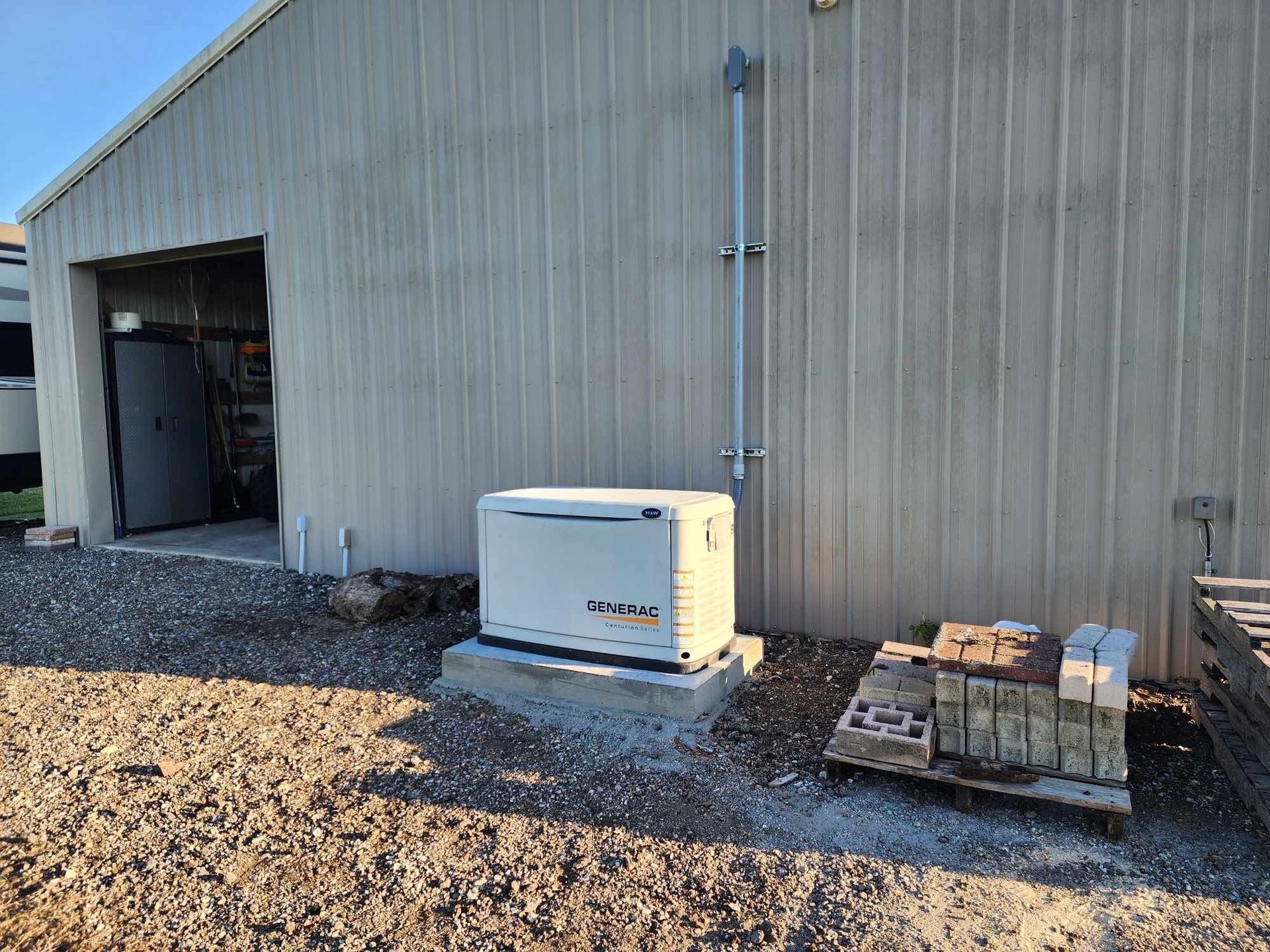
Installation involves positioning the generator to meet setback requirements, connecting fuel supply lines with proper shut-off valves and leak containment, and integrating the automatic transfer switch with the building's electrical panel. The system is configured to start automatically when utility voltage drops below acceptable thresholds and to transfer back to grid power once stable service is restored. Load bank testing verifies the generator maintains voltage and frequency stability under conditions that simulate real business operations.
Request a site evaluation to determine appropriate generator sizing and placement for your commercial facility.
What Commercial Systems Provide
Commercial generator solutions focus on minimizing downtime and protecting business operations rather than simply providing partial power to essential circuits. The system is sized to carry critical loads continuously—refrigeration, security systems, data equipment, lighting—while also supporting intermittent high-draw equipment like HVAC compressors that cycle on and off. Fuel capacity is matched to expected outage duration, with larger tanks or propane systems providing multi-day runtime for businesses that cannot tolerate extended closures during widespread utility failures.
Once installed, the commercial generator activates within seconds of detecting power loss, preventing interruption to point-of-sale systems, climate control, and security monitoring. Employees can continue working under normal lighting and environmental conditions, refrigerated inventory remains at safe temperatures, and customers experience minimal disruption to service. The automatic transfer switch manages the transition between power sources without requiring manual intervention or staff training.
Service plans address the higher duty cycles and load factors typical in commercial applications. Regular maintenance includes oil analysis to detect internal wear, valve adjustment to maintain fuel efficiency, and cooling system inspection to prevent overheating during sustained operation. The service does not include fuel delivery or electrical work beyond the transfer switch connection point, but technicians coordinate with electricians when panel modifications are necessary to integrate the backup power system.
Questions Business Owners Ask
Commercial generator decisions involve capacity planning, installation logistics, and ongoing maintenance considerations that differ from residential systems.
What factors determine the right generator size for a commercial facility?
Total connected load, simultaneous demand, and motor starting requirements all affect sizing. A retail space with significant HVAC load requires more capacity than an office with primarily lighting and computer equipment. Jake's Quality Services calculates demand based on actual equipment nameplates and usage patterns rather than relying on generic square-footage estimates that often result in undersized or oversized installations.
How do commercial generators handle three-phase power requirements?
Industrial facilities and larger commercial buildings often use three-phase electrical service for motors and heavy equipment. Commercial generators designed for these applications produce balanced three-phase output and include voltage regulation on all three legs. Single-phase generators cannot power three-phase equipment, making proper specification critical during the planning phase.
Why is regular maintenance more important for commercial systems than residential units?
Commercial generators typically operate under heavier continuous loads and may run for extended periods during outages that affect business-critical operations. This duty cycle accelerates oil breakdown, increases combustion deposits, and puts more thermal stress on cooling systems. Maintenance intervals are shorter and more comprehensive to ensure reliability when the system is needed most.
What installation considerations apply to commercial properties in Abbeville?
Local codes may require specific setback distances from property lines, sound attenuation for noise-sensitive areas, and fuel storage permits for tanks exceeding certain capacities. Generators must be positioned to avoid exhaust discharge toward building air intakes or adjacent properties. Site evaluations identify these requirements before installation begins.
How quickly can a commercial generator be installed once equipment is ordered?
Installation typically takes one to several days depending on site preparation requirements, fuel system complexity, and electrical integration work. Lead time for ordering the generator itself varies based on size and manufacturer availability. Properties planning generator installation should account for both equipment procurement and installation scheduling when preparing for storm season or planned utility work.
For commercial generator quotes and site evaluations across the Abbeville area, contact Jake's Quality Services at (337) 652-7654 to discuss your facility's backup power requirements.